Strangles Awareness Week: 4–10 May 2026
Strangles Awareness Week is a key moment in the equine calendar, bringing together yards, owners and equine organisations across the UK to raise awareness of one of the most common infectious diseases affecting horses.
At Remus Horse Sanctuary, caring for our horses, ponies and donkeys who have often come from challenging backgrounds, we understand just how important early detection, good biosecurity and open conversations are when it comes to protecting horses from illness.
What is Strangles?
Strangles is a highly contagious bacterial infection that affects a horse’s upper respiratory system. While most horses recover with appropriate care, it can spread quickly within groups if not managed properly.
In rare cases, the infection can spread to other parts of the body, sometimes referred to as ‘bastard strangles’. These cases can be far more serious and, in some instances, life-threatening.
Why awareness matters
With almost 500 lab-confirmed cases of strangles reported in the UK last year, the disease remains a genuine concern for yards of all sizes. Increased awareness helps encourage quicker diagnosis, better containment and ultimately fewer outbreaks.
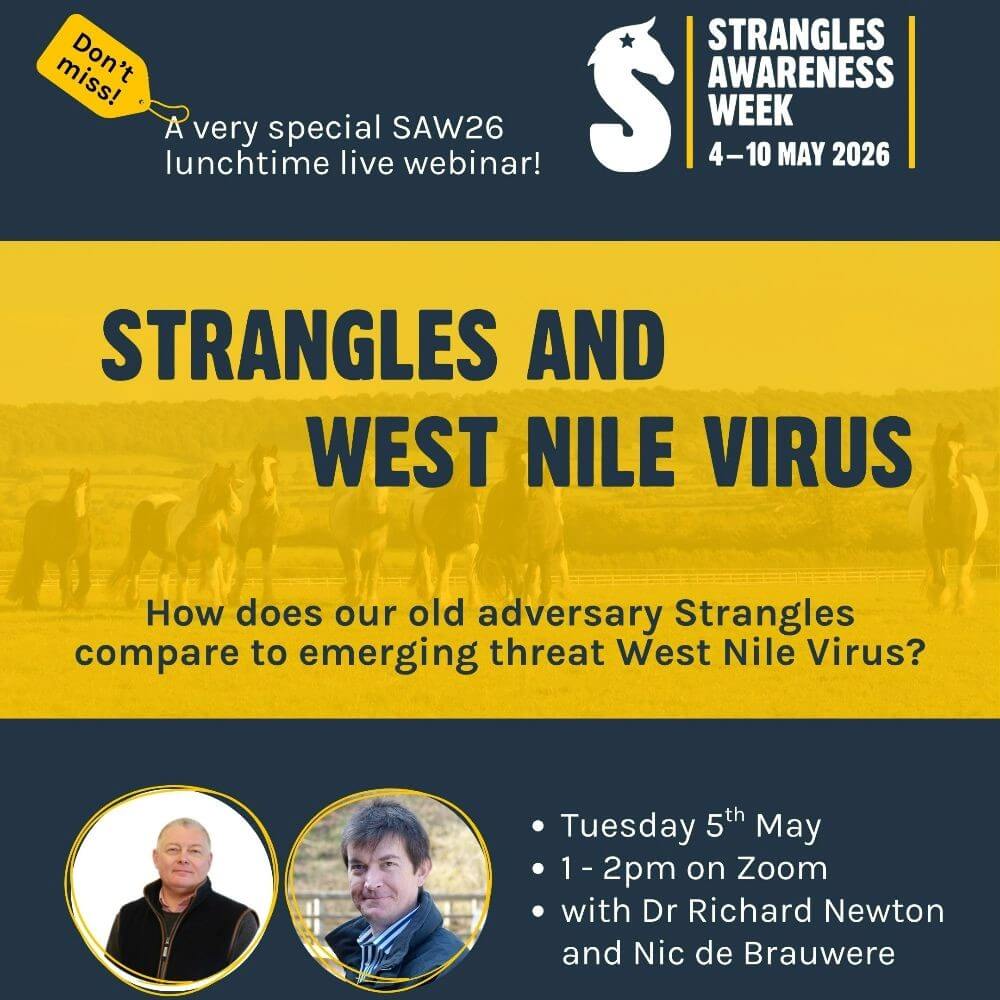
Strangles Awareness Week is also a chance to stay informed about broader equine health risks. On Tuesday 5 May, a special lunchtime live webinar will explore how strangles compares with the emerging threat of West Nile Virus.
The session will be presented by Richard Newton and Nic de Brauwere, offering valuable insight into current and evolving equine disease risks. Book your FREE place via Eventbrite.
How Strangles spreads
The infection can be passed on in two main ways:
- Direct contact with an infected horse
- Indirect contact via shared equipment such as buckets, tack, clothing or even hands
One of the challenges with strangles is that horses and donkeys can carry the bacteria without showing obvious symptoms. These carrier animals can unknowingly pass the infection on to others.
Signs to look out for
Early recognition is vital. Common signs include:
- Nasal discharge (a ‘snotty’ nose)
- Fever
- Lethargy or depression
- Swollen lymph nodes and abscesses, particularly around the head and neck
- Loss of condition
If you notice any of these symptoms, isolating the horse and contacting a vet promptly is essential.
Prevention and good practice
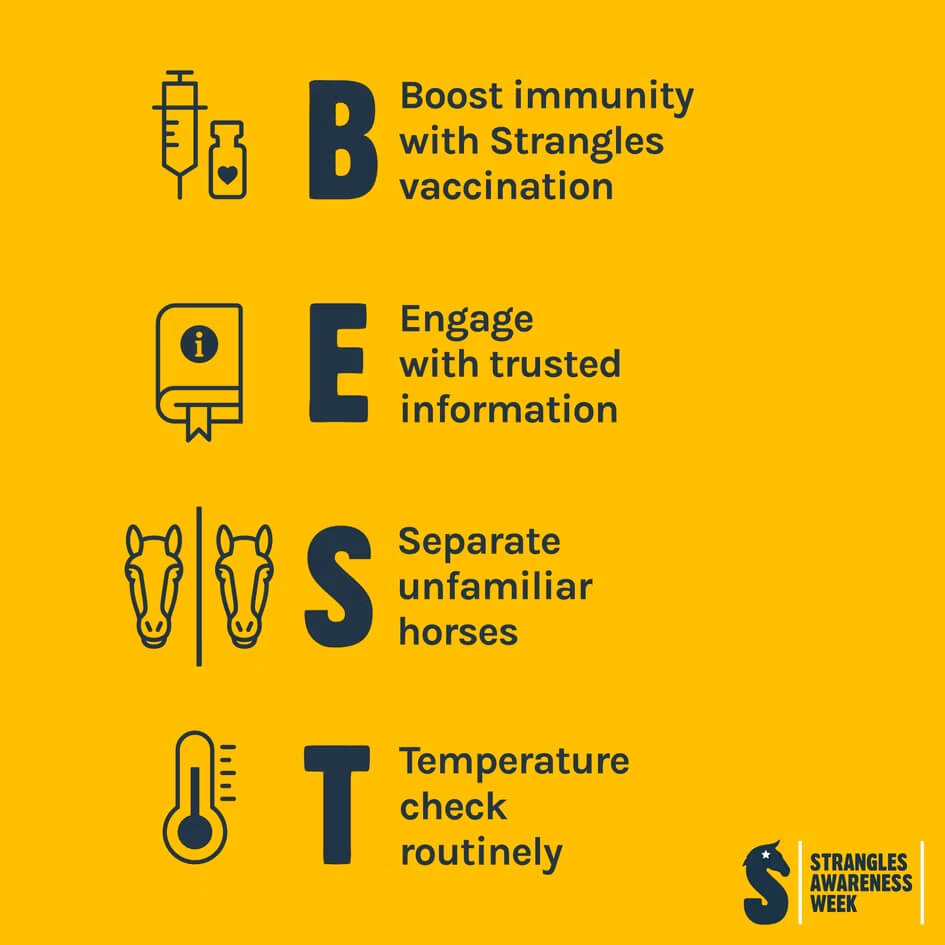
While strangles can be disruptive, there are practical steps that can significantly reduce the risk of spread:
- Maintain strict hygiene routines
- Isolate new arrivals before introducing them to others
- Avoid sharing equipment between horses
- Minimise contact with horses of unknown health status
- Monitor temperatures and health regularly, especially in higher-risk environments
Simple measures, consistently applied, make a real difference.
Keeping horses safe from infectious disease is something the whole equine community plays a part in. Whether you manage a large yard or care for a single horse at home, staying informed and practising good biosecurity helps protect not just individual animals, but the wider population.
Strangles Awareness Week is a timely reminder to review routines, refresh knowledge and remain vigilant.
#StranglesAwarenessWeek #SAW26 #SimplyTheBEST #Strangles
Remus Drought
Other Appeal